
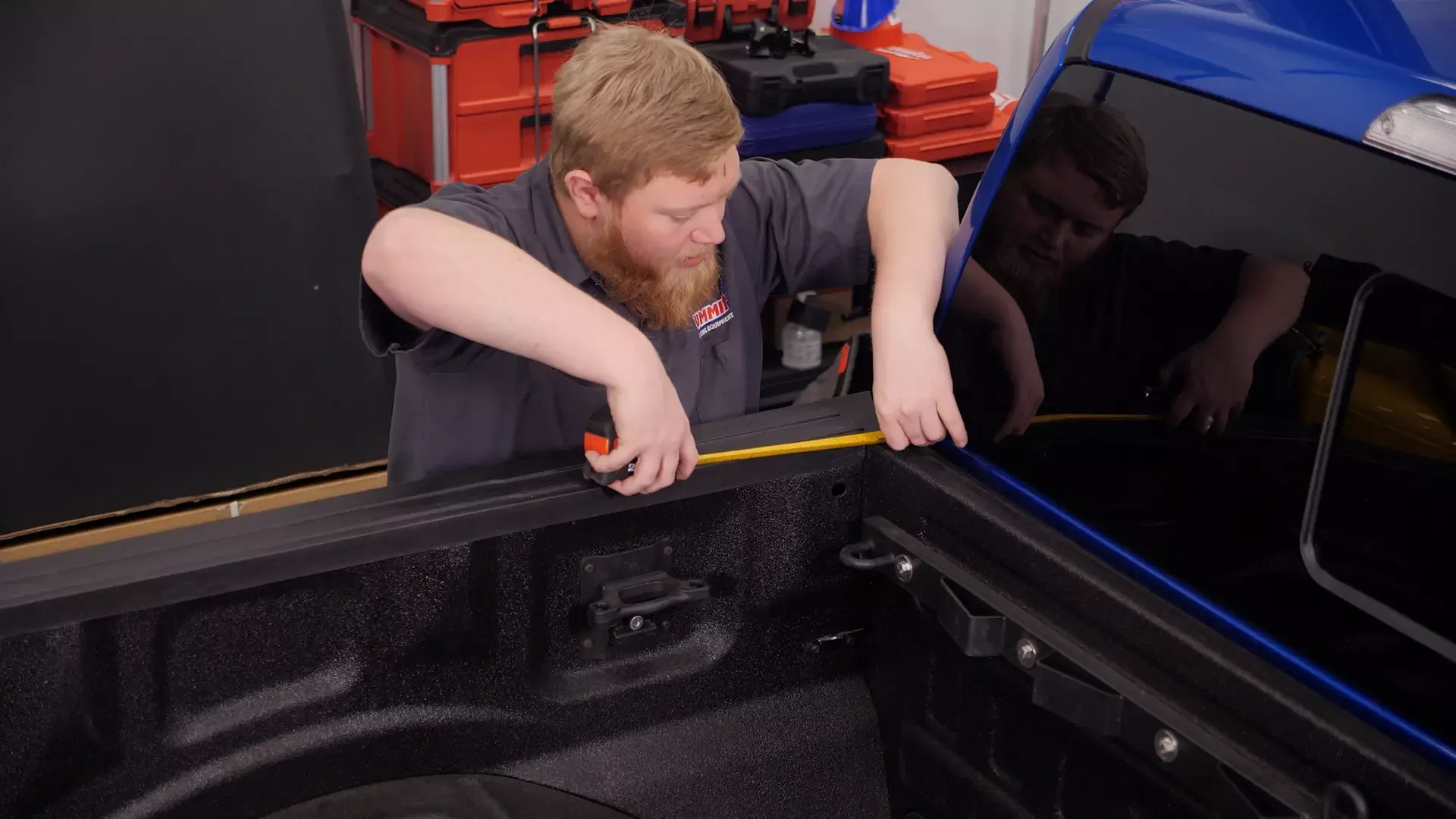
Hey there, truck enthusiasts! When it comes to choosing the perfect cover for your pickup truck, getting the measurements of your truck bed right is crucial. Whether you’re looking for a soft tonneau cover or a hard one, accurate measurements ensure a snug fit and optimal performance. So, grab your measuring tape and let’s dive into how to properly measure your pickup truck bed to make sure you get the ideal cover for your ride!
Data errors can lead to choosing the wrong cover, wasting your time and money. That’s why we’re providing the correct measurement techniques to help you get it right the first time.We even included a handy sizing chart at the bottom of the post so you can get a quick estimate.
Here are the tools you’ll need for measuring:
1.Tape measure
2.Pencil and notepaper or note app on your phone
3.Calculator or phone app
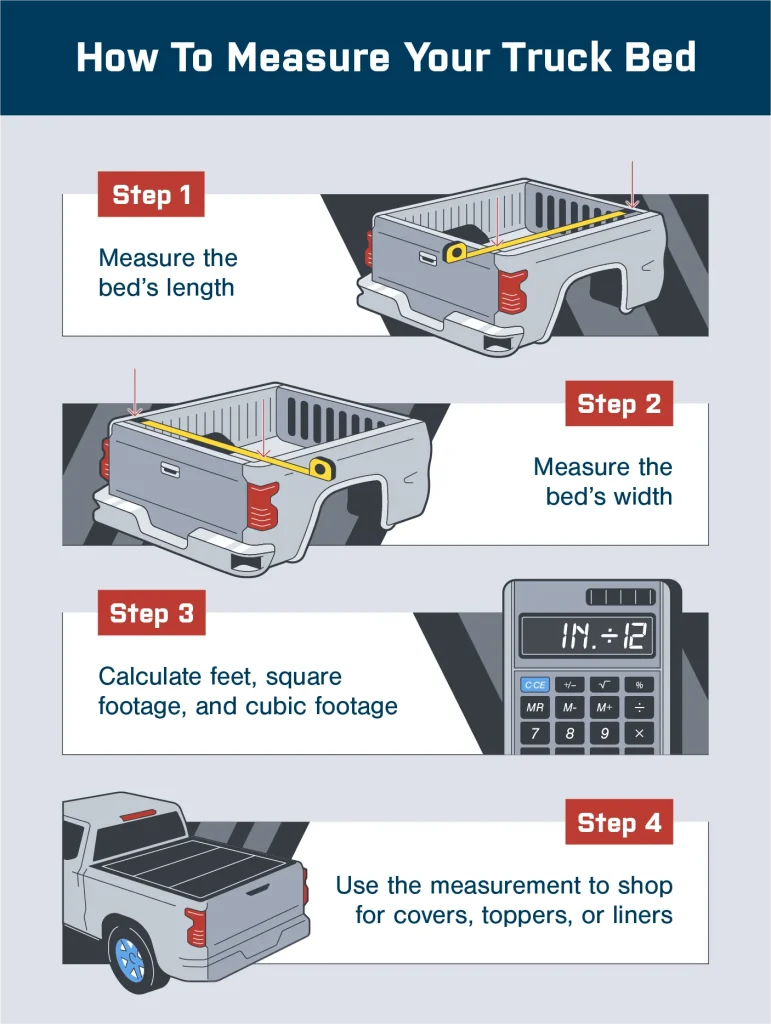
Step 1: Measure the Length
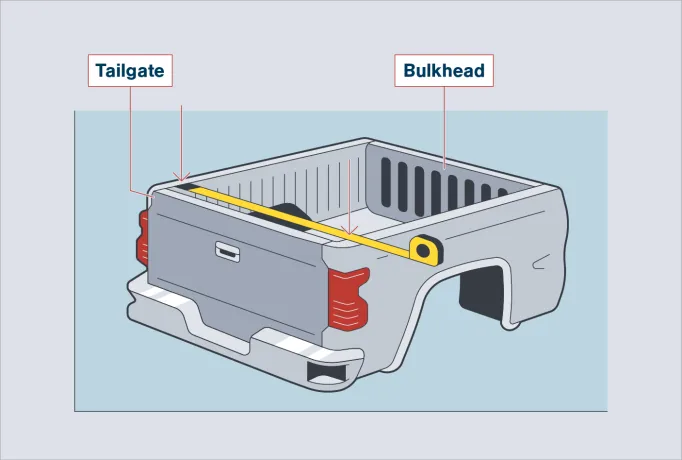
Grab your tape measure and start measuring. Begin at the inside edge of the bulkhead (the wall of the bed separating it from the cab of the truck) and pull back toward the tailgate. It should help to use the bed rail as a guide to keep the tape measure straight. Stop at the interior edge of the tailgate.
Jot the measurement on your notepaper or type it into a note on your phone.
Step 2: Measure the Width
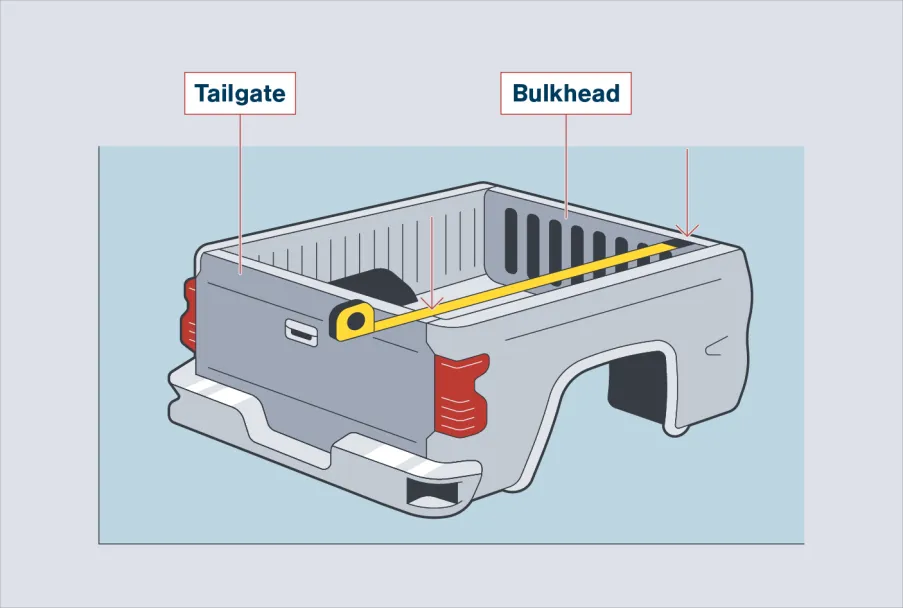
Starting at the interior edge where the tailgate meets the sidewall, run your tape measure along the tailgate and stop at the opposite sidewall’s interior edge. If your bed has pronounced wheel wells, it can help to measure the distance between them as well in case you’re looking to add an accessory that needs to lie flat across the bed.
Record the measurement on paper or on your phone.
Step 3: Calculate Feet
Divide the number of inches by 12 to determine the length of your truck bed in feet. Your bed length is the number of feet and residual inches (i.e. 5’8″)
Pro Tip
Keep in mind that most bed manufacturers round their bed sizes up, so just choose the option closest to your measurement. With this information, you’ll be able to choose the correct accessories to fit your truck bed.
Other Factors That May Impact Fit
While getting the measurements right is crucial, there are a few other factors that can affect how well your truck bed cover fits. These elements might seem minor, but overlooking them can lead to headaches down the road. Let’s dive into some of the key considerations:
Bed Rails
Your truck’s bed rails play a big role in how your cover fits. Some covers sit on top of the rails, while others tuck inside or flush with them. If your bed rails are extra wide, have built-in stake pockets, or are equipped with rail caps, these can affect the cover’s fit. Some covers may require rail adjustments or additional clamps, so be sure to consider the style of your bed rails when selecting your cover.
Wheel Wells
Depending on your truck model, the wheel wells can intrude into the bed space. While this doesn’t always affect the cover directly, it’s something to keep in mind if you plan on using certain types of covers, like roll-up retractable options, that require more internal space. If your wheel wells are particularly large, you might need a cover designed to accommodate them.
Bedliners and Mats
If you’ve added a bedliner or mat to protect your truck bed, this could affect how your cover fits. Drop-in liners, in particular, can add a bit of thickness to the bed, which might require a slightly wider cover. Spray-on liners, while thinner, can still create a bit of unevenness along the edges. Some covers are more adaptable to these variations, but it’s essential to check the compatibility of your cover with any bedliners or mats you’ve installed.
Accessories
Your truck bed might be home to more than just cargo. If you’ve installed toolboxes, ladder racks, or even a fifth-wheel hitch, these accessories will need to be factored into your cover choice. For instance, a toolbox at the front of the bed can shorten the usable bed length, requiring a cover specifically designed to accommodate both. Similarly, if you have a ladder rack, you’ll need to ensure your cover can work with it–many retractable or folding covers are designed with this in mind.
Bed Angles
Believe it or not, the angle of your truck bed can also impact the fit of your cover. Some beds are slightly tapered or have angled walls, which can affect how certain covers, especially hard or rigid ones, fit along the edges. While this isn’t a common issue, it’s something to keep in mind if you have a truck with amore unconventional bed shape.
Tailgate
Finally, your tailgate plays a crucial role in how your truck bed cover seals and secures. Some covers are designed to lock with the tailgate, providing an added layer of security. However, if your tailgate has any features–like a step, a camera, or an easy-lift system–you’ll want to ensure that the cover you choose won’t interfere with these functions. Also, if your tailgate isn’t perfectly aligned it could create gaps that might let in water or wind.
Manufacturer-Specific Measurement Guidelines
While measuring your truck bed might seem straightforward, some manufacturers have specific guidelines or nuances that can impact how you take and interpret those measurements. Knowing these manufacturer-specific details can help you avoid any surprises and ensure a perfect fit for your truck bed cover.
Ford
Ford trucks are known for their durable and versatile beds, but they can come with some unique considerations:
- Bed Length Designations: Ford often labels their truck beds by approximate length (e.g., 5.5’, 6.5’, 8’). However, the actual measurements might be slightly different, so it’s important to measure the bed yourself rather than relying solely on these designations.
- Tailgate Step: Some Ford trucks come equipped with an integrated tailgate step. If your truck has this feature, ensure that the cover you choose is compatible and won’t interfere with the step’s operation.
BoxLink System: If your Ford truck has the BoxLink system—an accessory mounting system along the bed walls—you’ll want to ensure your cover doesn’t obstruct these mounting points, especially if you plan to use them regularly.
Chevrolet/GMC
Chevrolet and GMC trucks often share platforms, but there are still a few things to watch out for when measuring:
Wide-Body Design: Some Chevy and GMC trucks feature a slightly wider bed design, especially in the Silverado and Sierra models. This can affect the fit of certain covers, so make sure to measure the width carefully, particularly if your truck has flared bed sides.
CornerStep Bumper: Many newer Chevy and GMC trucks come with a CornerStep bumper, which provides easier access to the bed. While this usually doesn’t interfere with bed covers, it’s worth checking to ensure your cover won’t obstruct access to the steps.
Multi-Flex Tailgate: The new Multi-Flex tailgate on some models can fold in multiple ways, adding versatility but also potential fit challenges. Ensure the cover you choose doesn’t interfere with any of the tailgate’s functions.
Ram
Ram trucks often feature bold designs and innovative storage options, which can impact how you measure for a cover:
- RamBox Storage: If your Ram truck is equipped with the RamBox Cargo Management System—integrated storage bins along the sides of the bed—this will impact your cover choice. You’ll need a cover specifically designed to fit over the RamBox, as standard covers typically won’t work.
- Tailgate Assist: Many Ram trucks feature a tailgate assist system that makes opening and closing the tailgate smoother. While this is a convenient feature, be sure your cover doesn’t impede the tailgate’s operation, particularly if it has additional locking mechanisms.
Toyota
Toyota trucks, especially the Tacoma and Tundra, have a few unique features worth considering:
- Composite Bed: Many Toyota trucks come with a composite bed material rather than traditional steel. This can slightly affect how certain covers fit, especially those requiring clamps or drilling. Be sure to choose a cover compatible with composite beds to avoid any issues.
- Deck Rail System: Toyota trucks often come equipped with a deck rail system for securing cargo. If you use this system regularly, make sure the cover you select allows easy access to the rails or comes with adapters that won’t obstruct the rail system.
- Shorter Beds: Some Tacoma models, in particular, have shorter bed lengths compared to full-size trucks. Double-check your measurements to ensure you’re not accidentally selecting a cover designed for a longer or standard-size bed.
Nissan
Nissan trucks, like the Frontier and Titan, have a few specific considerations when it comes to bed covers:
- Utili-Track Channel System: The Utili-Track system is a common feature in Nissan trucks, offering adjustable tie-down points along the bed rails. When choosing a cover, ensure it’s compatible with this system, as some covers may block access to these channels or require special adapters.
- Pro-4X Models: If you have a Pro-4X model, which is designed for off-roading, the bed might have slightly different dimensions or features, such as a factory-installed bed liner, that could impact cover fitment.
